
Cycle Mapping for PMDD: Understanding Your Symptoms Through Your Hormones
🎧 Prefer to listen? This topic is covered in Episode 3 of the Sirona Health Podcast: Diagnosing PMS vs PMDD and Getting a Diagnosis: How PMS and PMDD Are Actually Diagnosed, and What Cycle Mapping Adds
If you live with PMDD, you will already know that your symptoms are cyclical. But understanding when and why they occur is often far less clear.
Cycle mapping allows us to move beyond simply tracking periods and instead understand how your brain and body are responding to hormonal change across the month.
At Sirona Health, we use cycle mapping not just to confirm ovulation, but to answer a far more important question:
How do your hormonal shifts relate to your symptoms?
What is Cycle Mapping in PMDD?
Cycle mapping is the process of tracking hormonal changes across your menstrual cycle and aligning them with your emotional, cognitive, and physical symptoms.
In PMDD, symptoms are not caused by abnormal hormone levels. Instead, they are driven by an increased sensitivity to normal hormonal fluctuations, particularly in the luteal phase.
This means two women can have identical hormone levels, but completely different experiences.
Cycle mapping helps us identify:
When your symptoms begin in relation to ovulation
How quickly they escalate
Whether they resolve with menstruation
Whether ovulation is occurring consistently
This is critical for distinguishing PMDD from similar conditions, such as premenstrual exacerbation (PME) or underlying mood disorders.
The Hormones That Matter (and Why)
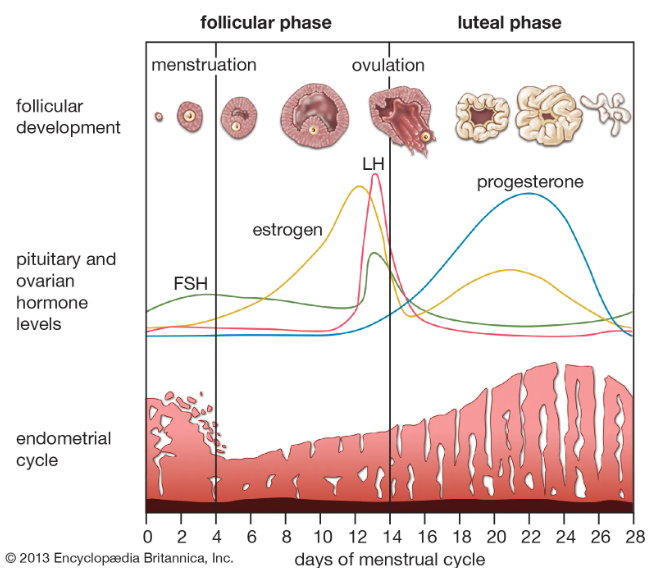
A typical cycle involves coordinated changes in:
Luteinising Hormone (LH) and Follicle Stimulating Hormone (FSH)
Oestradiol (E2)
Progesterone (reflected in urine as PdG)
For PMDD, the key moment is ovulation.
It is not the absolute level of hormones that drives symptoms, but the post-ovulatory shift, particularly the brain’s response to progesterone and its neuroactive metabolites (such as allopregnanolone), which interact with the GABA system.
This is why many women feel:
Relatively well in the follicular phase
A noticeable shift after ovulation
Progressive worsening in the luteal phase
Cycle mapping allows us to see this transition clearly.
Why Standard Testing Often Misses the Diagnosis
Traditional approaches, such as a single mid-luteal progesterone blood test, were designed for fertility assessment, not PMDD.They have several limitations:They do not show when ovulation occurredProgesterone levels fluctuate significantly throughout the dayThey provide no insight into symptom timing or severityMost importantly, they do not capture the dynamic relationship between hormones and mood.In PMDD, this relationship is everything.
A More Useful Approach: Continuous Hormone Tracking
For PMDD, we need to understand patterns, not single data points.Modern home-based tools such as the Mira hormone monitor allow us to track:LH (to identify ovulation)Oestradiol (to map the pre-ovulatory rise)PdG (to confirm ovulation and assess luteal phase dynamics)FSH (in selected cases, particularly perimenopause)Unlike traditional ovulation tests, which give a simple yes/no result, this approach provides quantitative hormone trends across the cycle.This is particularly helpful in PMDD when:Symptoms feel unpredictableCycles vary in lengthLuteal phases may be shortened or dysregulatedYou are trying to understand whether ovulation is triggering symptoms
Why This Matters in PMDD
There are several common but important misconceptions:“If my periods are regular, I must be ovulating normally.”
Not always. Research suggests that a significant proportion of apparently regular cycles may be anovulatory or suboptimally ovulatory.“My hormones must be abnormal if I feel like this.”
In PMDD, hormone levels are often normal. It is the brain’s sensitivity to change that is different.“Tracking my period is enough.”
For PMDD, symptom tracking without hormonal context can miss key insights, particularly around ovulation timing.Cycle mapping allows us to:Confirm whether ovulation is the triggerIdentify atypical patternsGuide treatment decisions (e.g. SSRIs, ovulation suppression, HRT approaches in perimenopause)
The Missing Piece: Symptom Mapping
Hormone data alone is not enough.For PMDD, the most powerful approach is combining:Hormone trackingDaily symptom trackingThis allows us to build a clear, individualised pattern of your cycle.We often see:A distinct “switch point” after ovulationA predictable escalation windowA rapid improvement with menstruationThis pattern is central to diagnosis and treatment planning.
How Sirona Health Uses Cycle Mapping
At Sirona Health, cycle mapping is not a standalone tool. It is part of a comprehensive, personalised assessment.We help you:Interpret your hormone data in the context of your symptomsIdentify whether your presentation is consistent with PMDD, PME, or another conditionUnderstand whether ovulation is the key driverUse this information to guide targeted treatmentThis may include:Timing SSRIs to the luteal phaseSupporting ovulation suppression where appropriateAddressing sleep, stress, and nervous system regulationPersonalised hormonal strategies in perimenopause
Taking the Next Step
If you feel that your mood, energy, or functioning changes significantly across your cycle, cycle mapping can be a powerful step towards clarity.Not because it gives you more data, but because it helps you make sense of what you are already experiencing.At Sirona Health, we combine clinical expertise with detailed cycle analysis to help you understand your body and move towards meaningful, sustained improvement.
FAQ
-
No. PMDD is a clinical diagnosis based on symptom patterns. However, hormone tracking can provide valuable additional insight, particularly in complex cases.
-
Not directly. It helps identify patterns and triggers, but severity is assessed based on how symptoms impact your daily functioning.
-
This may suggest premenstrual exacerbation (PME) or another underlying condition, which we can help you explore.
-
Not reliably. Hormonal contraception alters your natural cycle, making interpretation of hormone patterns more difficult.
References
[1] Roos J, Johnson S, Weddell S, Godehardt E, Schiffner J, Freundl G, Gnoth C. Monitoring the menstrual cycle: Comparison of urinary and serum reproductive hormones referenced to true ovulation. Eur J Contracept Reprod Health Care. 2015;20(6):438-50. doi: 10.3109/13625187.2015.1048331. Epub 2015 May 27. PMID: 26018113.
[2] Edelman A, Stouffer R, Zava DT, Jensen JT. A comparison of blood spot vs. plasma analysis of gonadotropin and ovarian steroid hormone levels in reproductive-age women. Fertil Steril. 2007 Nov;88(5):1404-7. doi: 10.1016/j.fertnstert.2006.12.016. Epub 2007 Mar 26. PMID: 17368453; PMCID: PMC2175208.
[3] Newman M, Curran DA. Reliability of a dried urine test for comprehensive assessment of urine hormones and metabolites. BMC Chem. 2021 Mar 15;15(1):18. doi: 10.1186/s13065-021-00744-3. PMID: 33722278; PMCID: PMC7962249.
[4] Newman M, Pratt SM, Curran DA, Stanczyk FZ. Evaluating urinary estrogen and progesterone metabolites using dried filter paper samples and gas chromatography with tandem mass spectrometry (GC-MS/MS). BMC Chem. 2019 Feb 4;13(1):20. doi: 10.1186/s13065-019-0539-1. PMID: 31384769; PMCID: PMC6661742.
[5] Filicori M, Butler JP, Crowley WF Jr. Neuroendocrine regulation of the corpus luteum in the human. Evidence for pulsatile progesterone secretion. J Clin Invest. 1984 Jun;73(6):1638-47. doi: 10.1172/JCI111370. PMID: 6427277; PMCID: PMC437074.
[6] Handelsman DJ, Nimmagadda R, Desai R, Handelsman TD, Whittle B, Skorupskaite K, Anderson RA. Direct measurement of pregnanediol 3-glucuronide (PDG) in dried urine spots by liquid chromatography-mass spectrometry to detect ovulation. J Steroid Biochem Mol Biol. 2021 Jul;211:105900. doi: 10.1016/j.jsbmb.2021.105900. Epub 2021 Apr 17. PMID: 33872762.
[7] Prior JC, Naess M, Langhammer A, Forsmo S. Ovulation Prevalence in Women with Spontaneous Normal-Length Menstrual Cycles - A Population-Based Cohort from HUNT3, Norway. PLoS One. 2015 Aug 20;10(8):e0134473. doi: 10.1371/journal.pone.0134473. PMID: 26291617; PMCID: PMC4546331.