
As parents, we spend so much time focused on our daughters’ day-to-day wellbeing—school, friendships, mood swings, food choices—that it’s easy to overlook what’s happening quietly in the background: her bones.
Adolescence is the single most important time for girls to build up strong, healthy bones. By the time your daughter turns 18, she’ll already have achieved about 90 to 95 percent of her peak bone mass. That means these teenage years are critical. The stronger her bones are now, the better protected she’ll be against osteoporosis and fractures later in life.
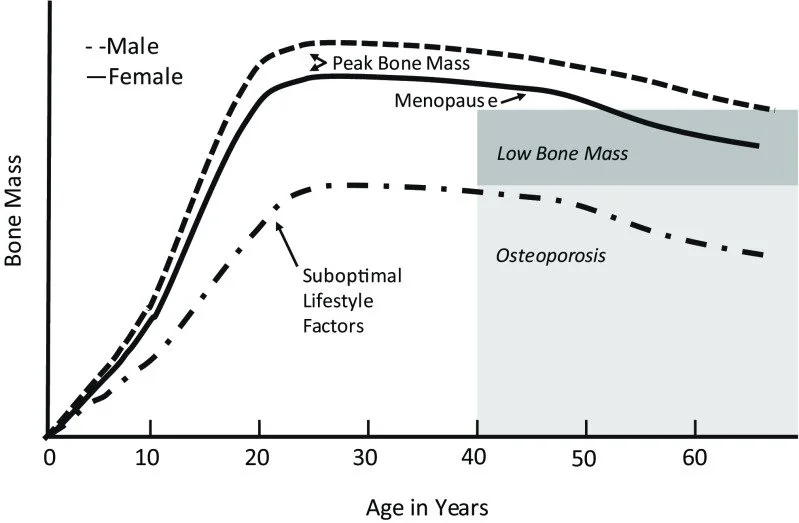
Weaver CM, Gordon CM, Janz KF, Kalkwarf HJ, Lappe JM, Lewis R, O'Karma M, Wallace TC, Zemel BS. The National Osteoporosis Foundation's position statement on peak bone mass development and lifestyle factors: a systematic review and implementation recommendations. Osteoporos Int. 2016 Apr;27(4):1281-1386. doi: 10.1007/s00198-015-3440-3. Epub 2016 Feb 8. Erratum in: Osteoporos Int. 2016 Apr;27(4):1387. doi: 10.1007/s00198-016-3551-5. PMID: 26856587; PMCID: PMC4791473.
But here’s where it gets complicated: some of the very treatments that can help with period problems or provide contraception during adolescence—like the combined oral contraceptive pill (COC) or the contraceptive injection known as depot medroxyprogesterone acetate (DMPA)—can affect bone development.
The role of contraceptives in teenage bone health
Many teenage girls are prescribed the pill to help with heavy or painful periods, for premenstrual syndrome, or to provide reliable contraception. It’s a common and often very helpful choice. But research suggests that starting COCs in the early years after a girl’s first period may slow down the rate at which her bones get stronger. This seems particularly true with the very low-dose pills (those with 20 micrograms or less of ethinyl estradiol). Higher-dose pills (30 micrograms or more) appear less likely to interfere with bone strength.
The contraceptive injection, DMPA, is another option often chosen because it’s convenient and effective. However, it has been shown to cause a measurable drop in bone density while it’s being used. The good news is that for most girls, bone strength tends to recover once the injections are stopped—especially if they’ve only been used for a couple of years. Still, this is an important consideration if your daughter is just entering those critical bone-building years.
Long-acting reversible contraceptives, such as implants or IUDs, don’t appear to interfere with peak bone mass at all. For many teenagers, these are worth discussing as a safer long-term option.
Balancing period problems, PMS, contraception, and bone health
If your daughter struggles with heavy or painful periods, or PMS, you’ll know how disruptive it can be for her school life, sport, and self-confidence. Hormonal treatments like the pill or the injection can bring real relief. But it’s also important to weigh up the benefits against the possible impact on her growing bones.
In some cases, non-hormonal treatments such as anti-inflammatory medicines, tranexamic acid, or iron supplements can help reduce symptoms without affecting bone health. Every girl is different, and the best choice depends on her specific needs and circumstances.
How lifestyle can protect her bones
Whatever treatment path you choose with your daughter, there’s a lot you can do at home to support her bone health.
A diet rich in calcium and vitamin D is key. That means plenty of dairy or fortified alternatives, leafy greens, and safe sun exposure—or supplements if recommended. Encouraging weight-bearing activities like running, dancing, netball, or even just regular brisk walking makes a big difference too, as exercise directly stimulates bone growth.
Just as important is what to avoid. Smoking and alcohol both weaken bones, so setting healthy habits early really matters. And if your daughter is on a treatment like DMPA, regular check-ins with a healthcare professional can help monitor her progress and reassess whether it’s still the best option.
Helping your daughter make the right choices
As parents, it can feel overwhelming trying to balance all these factors. You want to ease your daughter’s period problems, improve her PMS, give her safe contraception if she needs it, and protect her future health. The reassuring news is that with the right guidance, you don’t have to compromise one for the other.
At Sirona Health, we specialise in supporting teenage girls and their families through these decisions. In a consultation, we can talk through your daughter’s individual needs, review her options for managing periods or contraception, and create a tailored lifestyle plan to protect her bone health at the same time.