
🎧 Prefer to listen? This topic is covered in Episode 1 of the Sirona Health Podcast: PMS vs PMDD: Understanding the Key Differences
What Is PMS?
Premenstrual Syndrome (PMS) describes a pattern of recurring symptoms that appear in the luteal phase (the two weeks before a period) and usually disappear shortly after menstruation starts. Symptoms can be physical (such as bloating, breast tenderness, headaches, or sleep disruption) and/or emotional (mood swings, irritability, low energy).
What makes PMS different from “normal” pre-period changes is impact: when symptoms regularly interfere with day-to-day life, they may meet the threshold for PMS.
According to the RCOG Green-Top Guideline No. 48, around 40% of women experience PMS, while 5–8% report moderate to severe symptoms that significantly affect quality of life.
What Is PMDD?
Premenstrual Dysphoric Disorder (PMDD) is a more severe, psychiatric diagnosis that goes far beyond typical PMS. Defined by the DSM-5, PMDD requires:
At least five symptoms in the luteal phase
At least one mood-related symptom (such as marked irritability, depressed mood, or severe anxiety)
Symptoms that are so disruptive they impair work, relationships, or daily activities
Only a minority of women with PMS go on to meet the criteria for PMDD, but for those affected, the condition can feel life-changing.
Symptom Comparison: PMS vs PMDD
PMS (Premenstrual Syndrome):
Symptoms are usually mild to moderate
Can include a mix of physical, emotional, and behavioural changes
Defined by at least one recurring symptom that affects daily life
May reduce quality of life, but usually manageable
PMDD (Premenstrual Dysphoric Disorder):
Symptoms are severe and disabling
Mainly mood-related symptoms, though physical ones can occur
Requires five or more symptoms, including at least one mood-related (DSM-5 criteria)
Causes serious disruption to work, relationships, and daily activities
Why Precise Diagnosis Matters
Getting the diagnosis right matters because treatment approaches differ:
PMS may improve with lifestyle adjustments, supplements (like magnesium or calcium), cognitive behavioural therapy (CBT), or contraceptive choices.
PMDD often requires medical treatment such as SSRIs (antidepressants), hormonal therapy, or—emerging in research—neuroactive steroid treatments.
The role of symptom tracking
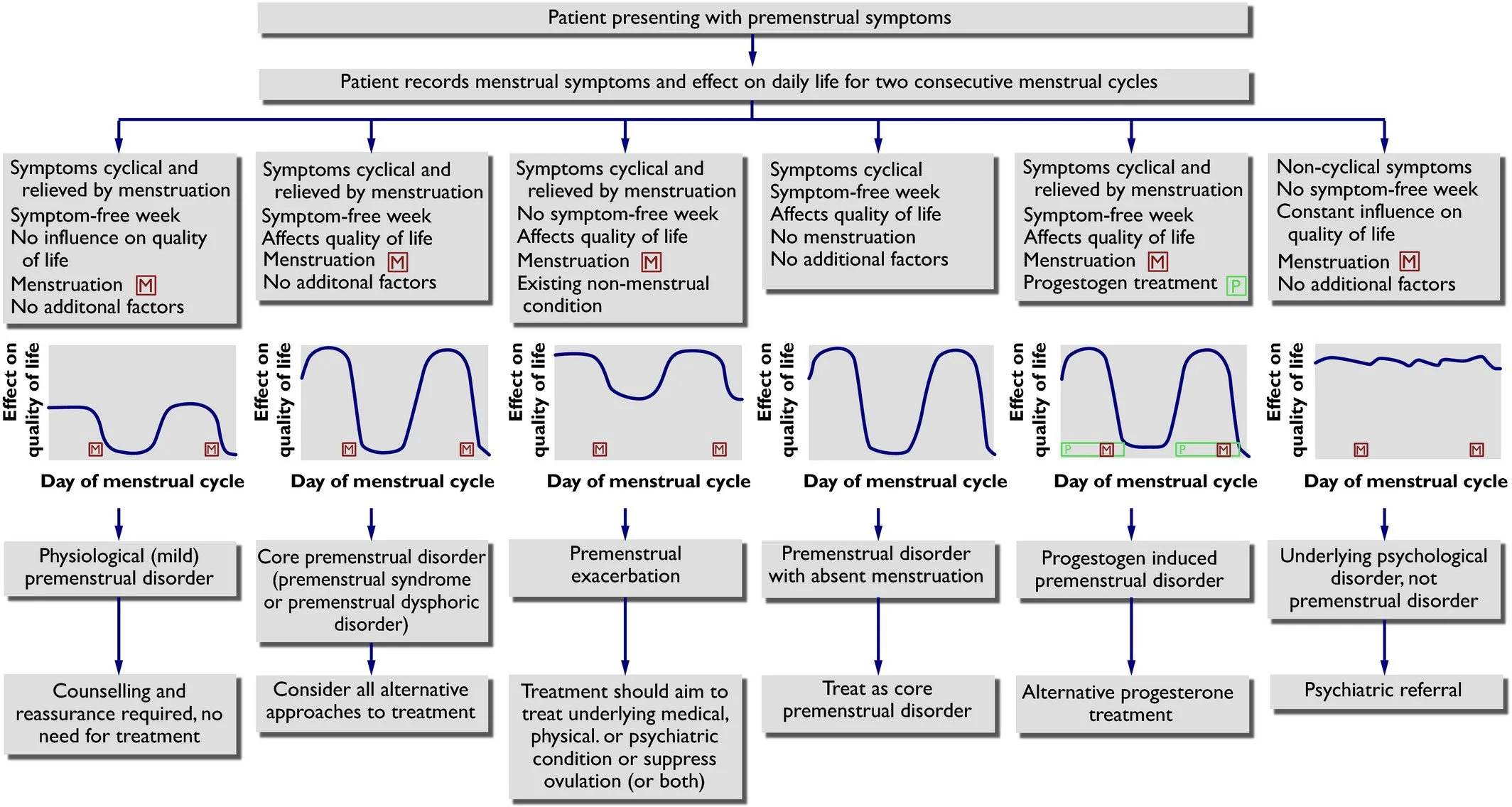
NICE, NAPS, and RCOG all stress the importance of prospective daily symptom tracking over at least two cycles. This helps confirm that symptoms are truly linked to the menstrual cycle and not to another condition. The ISPMD Montreal Consensus also reinforces this, recommending validated tools such as the Daily Record of Severity of Problems (DRSP).
Track your symptoms easily using the Me v PMDD app, or read my blog about Cycle Mapping to learn how you can accurately track your symptoms against your cycle using a Mira monitor. The latter is particularly useful for women who have premenstrual disorders without menstruation, as is seen following hysterectomy with conservation of the ovaries, after endometrial ablation or when periods stop after insertion of a levonorgestrel intrauterine system for contraception or heavy menstrual bleeding.
Recognising different types of premenstrual disorders
The Montreal Consensus also introduced the idea of “variant premenstrual disorders.” These include conditions such as depression, migraine, epilepsy, or autoimmune disorders that worsen premenstrually. Understanding whether symptoms are PMS, PMDD, or a variant disorder ensures women receive the right support and treatment.
When to Seek Help
You should seek medical advice if your symptoms:
Return month after month and feel predictable
Significantly affect your mood, work, relationships, or daily functioning
Don’t improve with simple lifestyle strategies
Make you feel that you are “not yourself” for part of every cycle
Specialist support can make a real difference. At Sirona Health, serving Bath and the South Cotswolds, I provide in-depth assessments, symptom diaries, and tailored treatment plans to help you take control of PMS and PMDD.
-
PMS involves recurring physical and/or emotional symptoms before a period that improve once bleeding starts. PMDD is a severe form with predominantly mood symptoms (e.g., marked irritability, anxiety, low mood) that significantly disrupt daily life.
-
PMS is common; many women experience some symptoms. PMDD affects a smaller group, but symptoms are much more disabling.
-
By confirming a cyclical pattern (symptoms in the luteal phase that improve with menstruation) using daily ratings over at least two cycles. Screening tools (e.g., PSST) are a first step; diagnosis relies on prospective tracking (e.g., DRSP).
-
The Premenstrual Symptoms Screening Tool (PSST) is a quick checklist to flag likely PMS/PMDD. If positive, follow up with daily ratings for 2+ cycles and a clinician review.
-
Usually no. Most people with PMS/PMDD have normal hormone levels—the issue is sensitivity to normal hormonal changes, not abnormal levels.
-
Options include lifestyle measures (sleep, exercise, nutrition), CBT, certain supplements (e.g., magnesium, calcium), SSRIs for PMDD, tailored contraception/continuous regimens, and (in select cases) hormonal suppression under specialist care.
-
Both can happen. Some combined oral contraceptives (especially continuous/extended regimens) help; others may worsen mood. Personalised selection and close follow-up are key.
-
It’s when another condition (e.g., migraine, depression, epilepsy, some autoimmune or skin disorders) reliably worsens premenstrually. Management targets both the underlying condition and the cycle link.
-
If your symptoms impair work, study, relationships, or mental health, or if self-care hasn’t helped. If you’re near Bath or the South Cotswolds, Sirona Health offers specialist assessment and treatment.