
Progesterone for perimenopausal symptoms
A study published in June 2023 looked at the role of progesterone alone as hormone replacement therapy for perimenopausal women. This was a small trial and therefore further larger studies are recommended but they found that taking 300mg at night of micronised progesterone orally reduced nights sweats in women with frequent night sweats (waking twice a week of more), improved sleep and reduced interference with daily life activities. Progesterone is taken in this way for 12-16 nights every 4 weeks, and a withdrawal bleed will then occur after it is stopped. Taking progesterone in this way has also been shown in another small trial to reduce the amount of menstrual bleeding, and thin the lining of the womb.
So why would you consider taking progesterone alone in the perimenopause rather than taking oestrogen which is traditionally prescribed? There is a biological reason why this is worth consideration!
There seems to be a progression in changes to the menstrual cycle as you move through the perimenopausal stages.
The first change is that there is less progesterone production in the latter half of the cycle, called the luteal phase, and this is called progressive luteal phase dysfunction. It is thought that this is because the process of producing eggs, called folliculogenesis, is less effective with increasing reproductive age.
This then progresses to increasing numbers of cycles in which an egg (follicle) is not released; this is called anovulatory. This has been shown to result in changes to the length of the menstrual cycle, either shorter (less than 21 days) or longer (greater than 36 days). It is the by-product of an egg being released, called the corpus luteum, which results in the production of progesterone in the second half of the menstrual cycle. If this process doesn’t occur then there is relatively higher levels of oestrogen to progesterone.
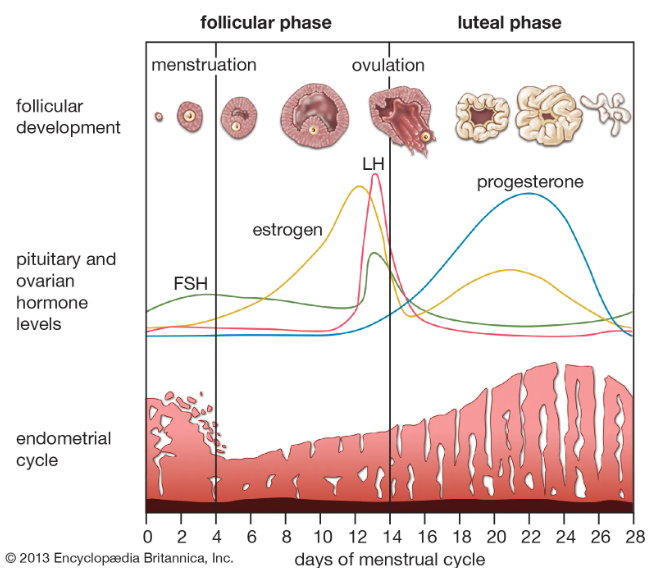
A second abnormality can occur in the perimenopause called a LOOP (luteal out of phase) cycle. In these cycles, ovulation does occur, but it occurs too rapidly - before the previous cycle has even completed. Compared with the typical ovulatory cycles, the cycles with LOOP events exhibited lower luteal phase progesterone, higher early cycle follicle-stimulating hormone, and lower early cycle inhibin B. They were also associated with abnormally short (<21 d) or long (>40 d) cycle length.
By replacing progesterone alone in the luteal phase, in women in the earlier stages of perimenopause, you are compensating for the natural drop occurring due to reproductive aging. Once anovulatory cycles become more frequent, additional replacement with oestrogen is likely to be needed.
The only way to definitely determine if you have a low luteal phase progesterone is serial cycle monitoring with a device like Mira. Use this code to receive 17% of a device and 27% off wands SIRONAHEALTH.
If you would like to find out more about cycle tracking during the perimenopause and how it might help you, please read my dedicated blog on this topic.
Frequently Asked Questions
What is progesterone and how does it help in perimenopause?
Progesterone is a hormone that helps regulate the menstrual cycle. In perimenopause, it can reduce symptoms like heavy bleeding, poor sleep, and anxiety.
Can progesterone help with sleep during perimenopause?
Yes. Micronised progesterone has a calming, sedative effect that can improve sleep quality, especially when taken at night.
Do I need oestrogen as well as progesterone?
Often, yes. While progesterone helps with some symptoms, oestrogen is usually needed for hot flushes, brain fog, and bone protection.
Is micronised progesterone safer than synthetic progestins?
Yes. Micronised progesterone (e.g. Utrogestan) is body-identical and has a better safety profile, especially for breast and cardiovascular health.
Can I take progesterone on its own?
Some women benefit from progesterone alone during early perimenopause, but others need a combination with oestrogen for full symptom relief.
About the Author
Dr Georgina Standen is a Women’s Health GP and Medical Director of Sirona Health. She specialises in menopause care, hormonal health, and holistic health assessments for women navigating midlife. Dr Standen combines evidence-based medicine with personalised, compassionate care.
References
Prior JC, Cameron A, Fung M, Hitchcock CL, Janssen P, Lee T, Singer J. Oral micronized progesterone for perimenopausal night sweats and hot flushes a Phase III Canada-wide randomized placebo-controlled 4 month trial. Sci Rep. 2023 Jun 5;13(1):9082. doi: 10.1038/s41598-023-35826-w. PMID: 37277418; PMCID: PMC10241804.
Kostova P, Zlatkov V. [Clinical study on the effect of vaginal administration of micronized progesterone at dysfunctional uterine bleeding in premenopause]. Akush Ginekol (Sofiia). 2009;48(2):3-7. Bulgarian. PMID: 20198768.
Van Voorhis BJ, Santoro N, Harlow S, Crawford SL, Randolph J. The relationship of bleeding patterns to daily reproductive hormones in women approaching menopause. Obstet Gynecol. 2008 Jul;112(1):101-8. doi: 10.1097/AOG.0b013e31817d452b. PMID: 18591314; PMCID: PMC2666050.
Santoro N, Crawford SL, Lasley WL, Luborsky JL, Matthews KA, McConnell D, Randolph JF Jr, Gold EB, Greendale GA, Korenman SG, Powell L, Sowers MF, Weiss G. Factors related to declining luteal function in women during the menopausal transition. J Clin Endocrinol Metab. 2008 May;93(5):1711-21. doi: 10.1210/jc.2007-2165. Epub 2008 Feb 19. PMID: 18285413; PMCID: PMC2386686.
Santoro N, Crawford SL, Lasley WL, Luborsky JL, Matthews KA, McConnell D, Randolph JF Jr, Gold EB, Greendale GA, Korenman SG, Powell L, Sowers MF, Weiss G. Factors related to declining luteal function in women during the menopausal transition. J Clin Endocrinol Metab. 2008 May;93(5):1711-21. doi: 10.1210/jc.2007-2165. Epub 2008 Feb 19. PMID: 18285413; PMCID: PMC2386686.